Telephone Answering Service UK Cost: AI vs Traditional Breakdown (2026)
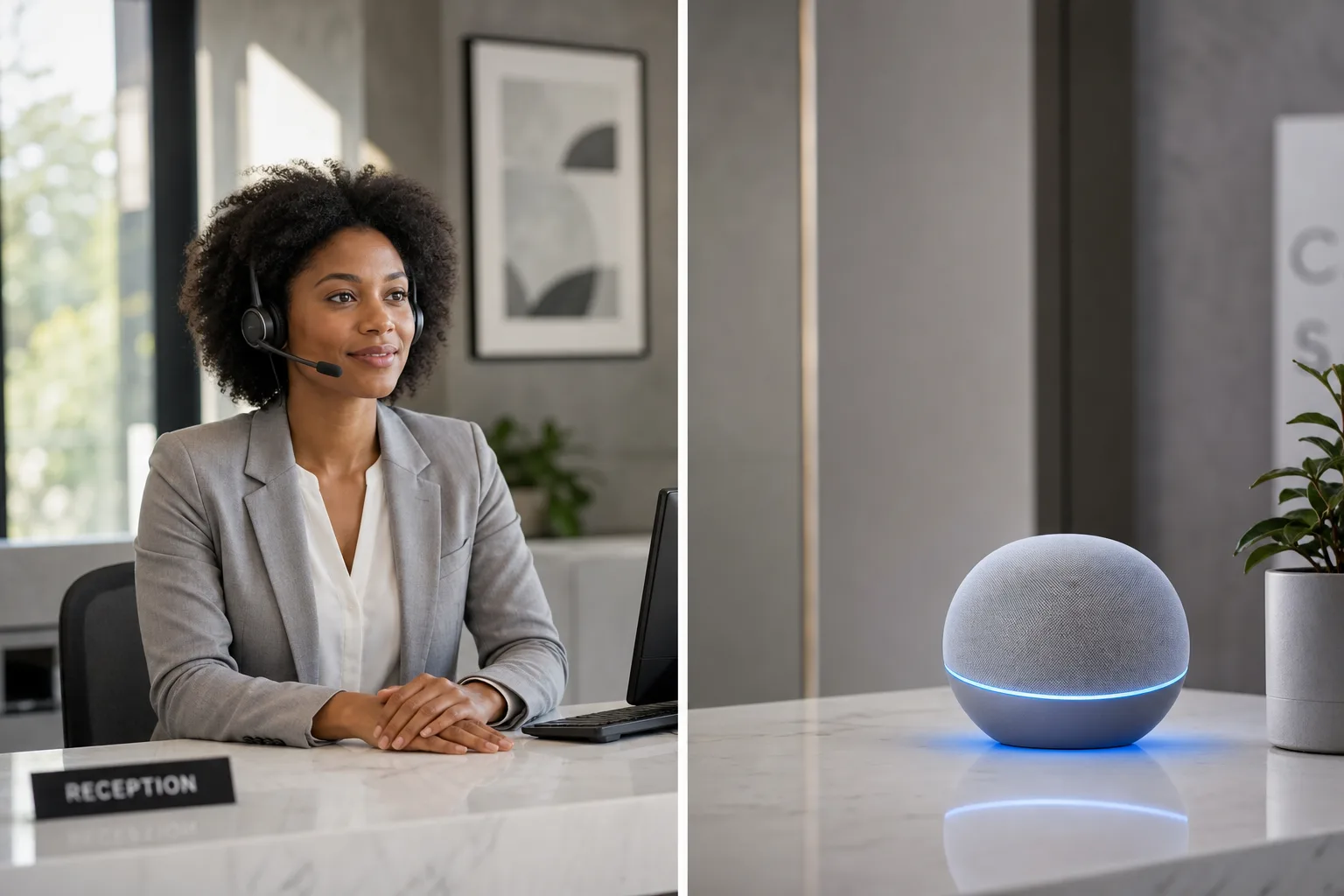
Understanding telephone answering service UK cost is easier once you know what you're comparing: a telephone answering service is a human or AI agent that answers calls in your business name, so no call goes to voicemail. Prices range from a small PAYG monthly spend to several hundred pounds for a bundled minutes plan, depending on call volume, hours needed, and whether you go human or AI.
This guide breaks down every pricing model you'll encounter, explains what actually drives your monthly bill, and gives you a clear framework for deciding whether a human receptionist service or an AI phone answering solution makes more financial sense for your business.
One figure worth keeping in mind from the start: according to research cited by Ever-Help, home services businesses miss around 27% of their inbound calls, and 85% of customers whose calls go unanswered will not call back. That context changes how you should think about the cost of any answering service.
What Affects Your Monthly Bill?
Call volume is the biggest driver. Higher volumes push you towards monthly bundles, where the effective per-minute rate drops. Lower or unpredictable volumes suit pay-as-you-go, even though the per-unit rate is higher.

Out-of-hours cover adds cost with human-staffed services. Nights and weekends typically carry a surcharge. AI services like Callacy include round-the-clock availability by default, since there are no shift patterns or overtime costs involved.
Setup fees can catch you out on the first month. Human-staffed services often charge a one-off onboarding fee, though some waive it on longer contracts. AI services generally have lower or no setup fees. Always ask for the total first-month cost before signing.
Contract length matters too. Longer commitments often unlock lower per-minute rates or waived setup fees, but they increase your risk if call volumes change.
UK Telephone Answering Service Cost by Pricing Model
You pay a rate for every minute a receptionist (or AI) spends on your calls. It sounds simple, but the detail that catches people out is rounding. Many providers round up to the nearest 30 seconds or full minute. If most of your calls are short appointment confirmations, that rounding can inflate your bill by 20-30%, according to Ever-Help's answering service pricing guide. Per-minute billing suits businesses with unpredictable call volumes or calls that vary wildly in length.
Per-call flat rate
A fixed fee per call answered, regardless of duration. This is predictable and works well if your calls tend to run long, since you're not penalised for a 10-minute conversation. It's less attractive if most of your calls are quick check-ins, where a per-minute rate would be cheaper.
Monthly minute bundles
You buy a block of minutes upfront (say, 50, 100 or 200 minutes per month). Unused minutes usually don't roll over, and overage rates kick in once you exceed the bundle. This model suits businesses with fairly consistent call volumes. Buying a larger bundle often reduces your effective per-minute rate, so it's worth checking the overage cost carefully before committing to a smaller tier.
Pay-as-you-go plans
PAYG means you only pay for calls that are actually handled, with no monthly minimum. It's the lowest-risk entry point for small businesses testing an answering service for the first time. Providers such as those serving the UK small business market offer this model, and discounts of up to 20% are available when buying higher volume call bundles, according to answer.co.uk. The trade-off is that the per-unit rate is usually higher than a committed bundle.
- How Callacy handles out-of-hours calls
- AI receptionist for small business
- Call answering for trades and home services
- Compare AI vs human answering service
Frequently asked questions
How much does a call answering service cost in the UK?
Costs vary widely depending on the pricing model and call volume. Pay-as-you-go services charge per call or per minute with no monthly minimum, while bundled plans offer lower per-minute rates in exchange for a monthly commitment. AI-powered services generally cost less per interaction than human-staffed ones. Check the Callacy pricing page for a specific quote based on your expected volume.
What is the difference between per-minute and per-call pricing?
Per-minute billing charges you for the actual (or rounded) duration of each call, so short calls are cheap and long ones cost more. Per-call billing charges a flat fee regardless of duration, which favours businesses with longer average calls. The hidden risk with per-minute is rounding: some providers round up to the nearest 30 seconds or full minute, which can significantly inflate your bill if your calls are typically short.
Are there setup fees for telephone answering services?
Many human-staffed services charge a one-off setup or onboarding fee to configure your call script, greetings and routing instructions. Some waive this fee on longer contracts. AI services often have lower or no setup fees because configuration is handled digitally. Always ask for the total first-month cost, not just the monthly rate, before signing.
Does a telephone answering service work 24/7 and what does that cost extra?
Human-staffed services can provide 24/7 cover, but out-of-hours and weekend calls typically carry a surcharge, sometimes a significant one. AI answering services like Callacy include round-the-clock availability by default, since the AI doesn't have shift patterns or overtime costs. If you need consistent out-of-hours coverage, an AI service is almost always the more cost-effective option.
Is an AI telephone answering service cheaper than a human one?
In most cases, yes. The answering service industry is seeing AI cut costs by 70-85% compared to traditional staffed services. AI services also don't charge extra for nights and weekends, and their cost per call tends to stay flat as volume grows rather than rising with additional agent time. For straightforward calls like bookings and FAQs, AI is generally the more economical choice.
How does an answering service work in practice?
Your business phone number is either forwarded to the answering service or the service is set as your overflow when you can't pick up. A receptionist (human or AI) answers using your business name, follows a script or set of instructions you've configured, and either takes a message, books an appointment or transfers the call. You then receive a summary by email or through an app. You can see how Callacy handles this process to get a concrete sense of what AI call handling looks like day to day.