What Is a Missed Call Service? How It Works and When Your Business Needs More
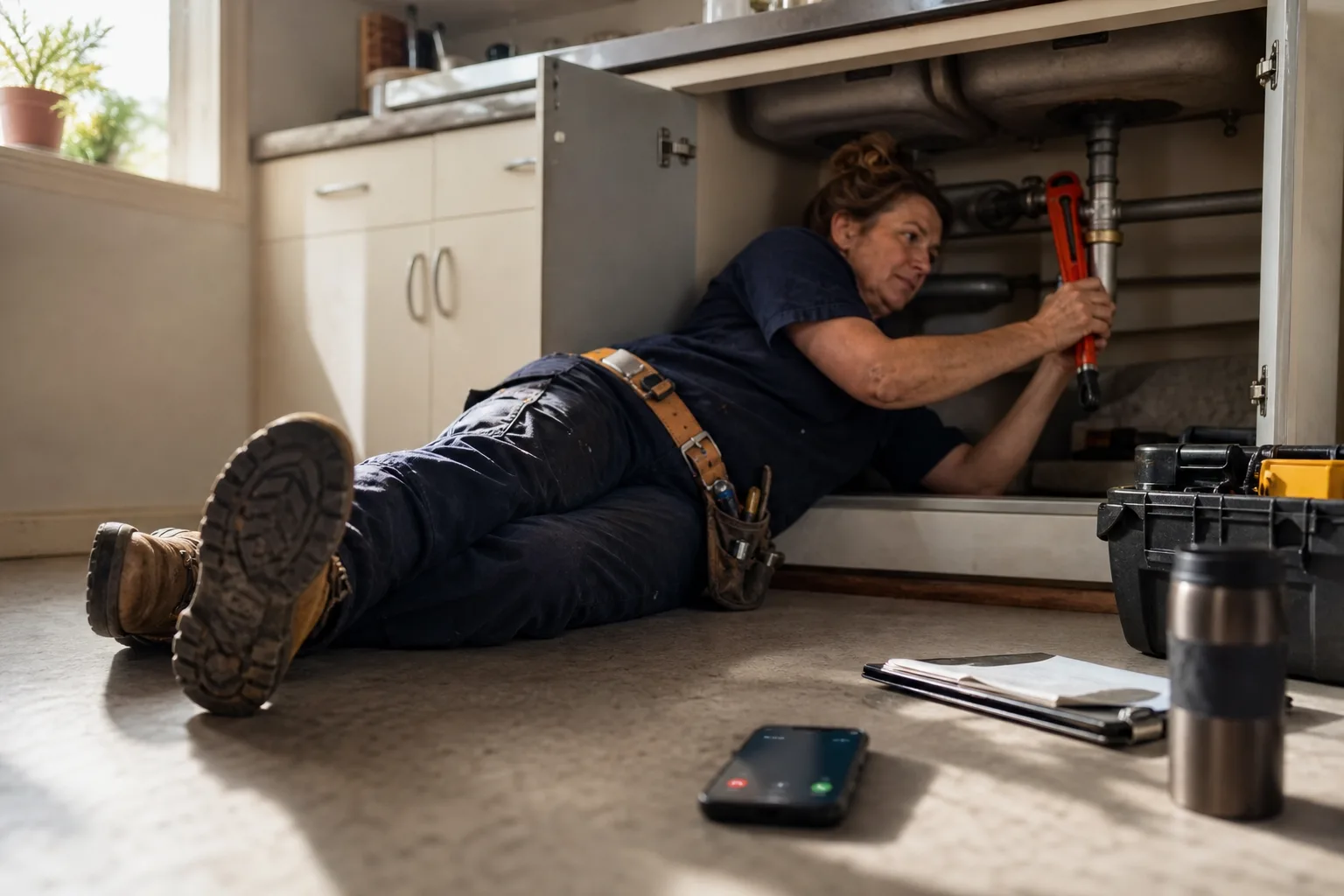
A missed call service does one of two things: it alerts you when a call to your business goes unanswered, or it lets customers deliberately ring and hang up to trigger an action like a callback. Both are useful. Neither one actually talks to your caller.
That distinction matters more than most owners realise. Call tracking platform data shows 27% of inbound calls to home services businesses go unanswered, and in a 2025 survey of 1,000 United States consumers, 82% said they would call a competitor after an unanswered call. So the question isn't just what a missed call service is. It's whether knowing you missed a call is enough.
This guide explains both meanings, how each works step by step, and how to decide what your business actually needs.
What is a missed call service?
A missed call service is any system that responds when a phone call isn't answered by a person. The term covers two quite different products, and search results often mix them up.
The two types of missed call service explained
Type 1: the missed call alert. Your phone carrier or provider sends you a notification (usually a text, sometimes with a voice recording) whenever a call goes unanswered. You get the caller's number and the time. That's it. It's a safety net, not a conversation.
Type 2: the marketing missed call service. A business advertises a virtual number and asks people to "give a missed call". The customer rings, the call disconnects before it's answered (so it costs them nothing), and that triggers an action: a callback, a text with a link, a registration, a vote.
How a missed call service works, step by step
- Alert version: a customer dials your number, you don't pick up, the call ends or diverts, and the system texts you the caller's number.
- Campaign version: a customer dials your advertised virtual number, the system rejects the call after one or two rings, captures the number, then fires the trigger (callback queue, SMS, opt in).
If you were searching because you keep missing calls from customers, you want type 1. If you saw "give us a missed call" in an ad, that's type 2.
Missed call alerts vs voicemail: what's the difference?
Voicemail asks the caller to do the work: listen to your greeting, think of a message, say it clearly. Most won't. Fewer than 3% of callers sent to voicemail at a home services business leave a message, according to industry estimates cited by Dialzara.
A missed call alert flips that. The caller does nothing, and you automatically get their number. The trade off: you know *who* called but not *why*. Was it a $5,000 job or a wrong number? You can't tell until you ring back.
Here's the uncomfortable truth about both: neither helps the caller in the moment. The person with a leaking hot water cylinder still has a leaking hot water cylinder. Voicemail gives them a recording. An alert gives them silence. Both give your competitor a chance.
How businesses use missed call services
Lead capture and callback requests
The classic campaign play: a tradie runs a radio ad saying "give us a missed call for a free quote". Ringing costs the caller nothing, the system captures every number, and the office calls back during work hours. It works well for high volume, low urgency campaigns where a next day callback is fine.
It falls apart when the caller has an urgent problem. Nobody gives a missed call about a burst pipe and waits patiently.
Opt ins, verification and feedback
Businesses also use missed calls as a cheap yes button: register for an event, confirm a booking, vote in a promotion, verify a number. One ring equals one response, and it works on any phone, including the old flip phone your customer's nana still uses.
The alert version has a quieter everyday use: after hours awareness. You finish a job at 6pm, check your phone, and see three missed calls. At least you know they happened. What you do next is the part that decides whether those callers become customers.
The hidden cost of a missed call for a small business
An alert tells you that you lost an opportunity. It does nothing to save it. Research from Ruby Receptionists shows 35% to 45% of calls to service businesses come outside standard 9 to 5 hours, exactly when nobody's there to answer.

Do the maths for your own business. Say your average job is worth $400, and you miss 5 calls a week. Even if only half were real prospects, that's $1,000 a week, or roughly $4,000 a month, sitting in your missed call log. Across 25 million answered calls, 92% were real opportunities and only 8% spam, according to Ruby's Call Trends Report, so most of those rings were worth something.
Speed decides everything. Contacting a new lead within 5 minutes instead of 30 makes you 100 times more likely to reach them, according to lead response research cited by Invoca. When you're on the tools or with a client, that window closes fast.
What to do when you can't answer every call
You have three tiers, in escalating order of what the caller gets.
A simple callback workflow that actually happens
- Set a target: every missed call returned within 15 minutes during work hours, first thing next morning after hours.
- Assign one owner per day. "Someone will call back" means nobody does.
- Log the outcome. If you don't track it, the alert was pointless.
Text back and automated responses
An automatic SMS the moment a call is missed ("Sorry we missed you, we'll call within the hour, or reply here") acknowledges the caller instantly and buys you time. It still doesn't answer their question.
The top tier is having the call actually answered: divert to a teammate, a human answering service, or a 24/7 AI receptionist for New Zealand businesses that greets the caller, answers questions and books the job on the spot. Choose by three factors: call value (what's one job worth?), urgency (can it wait?), and volume (how many are you missing?). High on any two, and logging isn't enough.
Choosing the right setup for your business: a quick checklist
Whatever you're evaluating, run it through these questions:
- Does it work after hours, weekends and public holidays, or only when someone's around?
- Does the caller reach a resolution, or just get logged?
- What details get captured: name, reason for calling, booking request, or only a number?
- How fast are you notified, and can you act from your phone?
- Does it connect to your calendar or customer records?
- Can it book appointments or qualify leads, not just record numbers?
- What does it cost per month versus the value of one saved job?
If your answers from the last section said low value and low urgency, a basic alert is fine. Anything above that, and you want the call answered. The how it works page shows what that looks like in practice.
The bottom line: alerts tell you what you lost, answering wins it
A missed call service is a genuinely useful, low cost safety net, and a clever marketing tool for campaigns. If that's all you need, take it.
But if every inbound call could be a paying job, the goal shifts from knowing to answering. A 24/7 AI receptionist answers every call, books appointments and captures lead details while you're on the tools, with no extra staff. Check the pricing to see what that looks like for a business your size.
Frequently asked questions
What is a missed call service and how does it work?
It's a system that responds when a call isn't answered. Either your carrier texts you an alert with the caller's number, or a marketing setup lets customers ring a virtual number and hang up to trigger a callback, text or registration. The caller dials, the call goes unanswered or disconnects, and an alert or action fires automatically.
What is the difference between a missed call alert service and voicemail?
Voicemail asks the caller to leave a message, and most don't bother. A missed call alert captures their number automatically with zero effort from them, but gives you no context about what they wanted. Neither one actually helps the caller at the time they ring.
Is a missed call service free for the caller?
For marketing campaigns, yes. The call disconnects before it's answered, so the caller is never charged. For alert services, the caller pays whatever a normal call costs them; it's the business that pays for the alert service.
How do businesses use missed call services for lead generation?
They advertise a virtual number with a call to action like "give us a missed call for a free quote". Each ring captures a phone number, which feeds a callback list, text campaign or registration. It suits high volume, low urgency campaigns where a later callback is acceptable.
How quickly should I call back a missed call before the lead goes cold?
Minutes, not hours. Reaching a new lead within 5 minutes instead of 30 makes you dramatically more likely to connect, and 82% of consumers in a 2025 survey said they'd call a competitor after an unanswered call. Aim for 15 minutes during work hours.
Is a missed call alert enough, or do I need a service that actually answers the call?
It depends on call value, urgency and volume. If missing a call means losing a high value or urgent job, an alert isn't enough, because the caller still talks to no one. A 24/7 answering option, like an AI receptionist, resolves the call on the spot.