What Is Call Handling? A Plain English Guide for New Zealand Businesses
Call handling is the end to end process of managing your business's phone calls, from the moment the phone rings through to resolution and follow up. It covers who answers, what they say, how they figure out what the caller needs, and what happens after the call ends.
If you've been researching receptionists or answering options and keep bumping into this term, you're in the right place. This guide gives you a clear call handling definition, walks through what a well handled call actually sounds like, and helps you decide whether to handle calls yourself, outsource them, or let an AI receptionist for New Zealand businesses do the job.
Call handling definition: what it actually means
Here's the simplest call handling definition: it's everything that happens around a business phone call, not just the act of picking up. It includes answering promptly, greeting the caller, working out why they're calling, resolving their request or routing them to the right person, and recording what happened so nothing gets lost.
Picture a customer calling a plumbing business to book a job. Good call handling means the phone is answered within a few rings, the caller is greeted professionally, their details and the job are captured, a booking is made or promised, and the plumber sees the job in their schedule. Bad call handling means the phone rings out, or someone answers with 'yeah?' and scribbles a name on a receipt that ends up in the ute's glovebox.
You'll also hear related terms. Call management is the broader discipline of organising how calls flow through a business. A call answering service is an outsourced team that handles calls on your behalf. A virtual receptionist does the same job remotely rather than at your front desk.
Inbound vs outbound call handling
Inbound call handling covers calls coming into your business: enquiries, bookings, support questions, complaints. Outbound call handling is your business dialling out: sales calls, appointment reminders, follow ups.
Most small and medium businesses care almost entirely about inbound. That's where the money walks in, and it's where things fall apart when nobody's free to pick up.
What happens on a well handled call
A well handled call isn't luck or personality. It's a repeatable sequence that any person, service or AI can follow. Once you know the stages, you can listen to your own calls and hear exactly where they break down.
The six stages of a handled call
- Prompt answer: the phone is picked up within a few rings, every time.
- Professional greeting: a consistent, branded hello that names the business.
- Identifying intent: working out what the caller actually wants.
- Qualifying or screening: deciding how urgent or valuable the call is.
- Resolving or routing: booking the job, taking a message, or transferring the call.
- Logging and follow up: recording the details and confirming what happens next.
Skip any one of these and the call leaks value. Answer late and the caller's already dialling your competitor. Skip the log and the message never reaches the person who needed it.
What good looks like at each stage
Good answering sounds like the call being picked up on the second or third ring. Bad is seven rings, then voicemail.
A good greeting is 'Good morning, Smith and Sons Plumbing, this is Ana.' Bad is a flat 'hello' that leaves the caller wondering if they've dialled the right number.
Good intent capture is 'Are you calling about a new job, or an existing booking?' Bad is ten minutes of chat before anyone knows why the person called. Good qualifying is asking 'Is the leak active right now?' so emergencies jump the queue. Good resolution is a confirmed booking time before the call ends. And good logging means the caller's name, number and need are recorded, not entrusted to memory.
Why call handling matters for small businesses
Every missed or badly handled call is a lost lead or a dented first impression. Callers with a problem to solve rarely leave voicemail, and they rarely ring back. They just call the next business on the list.
Speed matters more than most owners realise. Even in emergency services, where answering is a life or death discipline, targets are measured in seconds: police forces in England, Wales and Northern Ireland aim to answer 90% of 999 calls within ten seconds, according to 999 performance data published on police.uk. Your customers aren't that extreme, but their patience is still measured in rings, not minutes.
Then there's the interruption cost. A tradie mid job, a clinic receptionist juggling the lunch rush, an accountant in a client meeting: every time the phone pulls someone away, the work in front of them suffers. Call handling is a revenue and customer experience function, not an admin chore. Treat it that way and the business case for doing it properly writes itself.
The main ways businesses handle calls
There are four broad approaches, and each trades cost, coverage and consistency differently. None is universally right; it depends on your call volume and hours.
In house staff or a dedicated receptionist
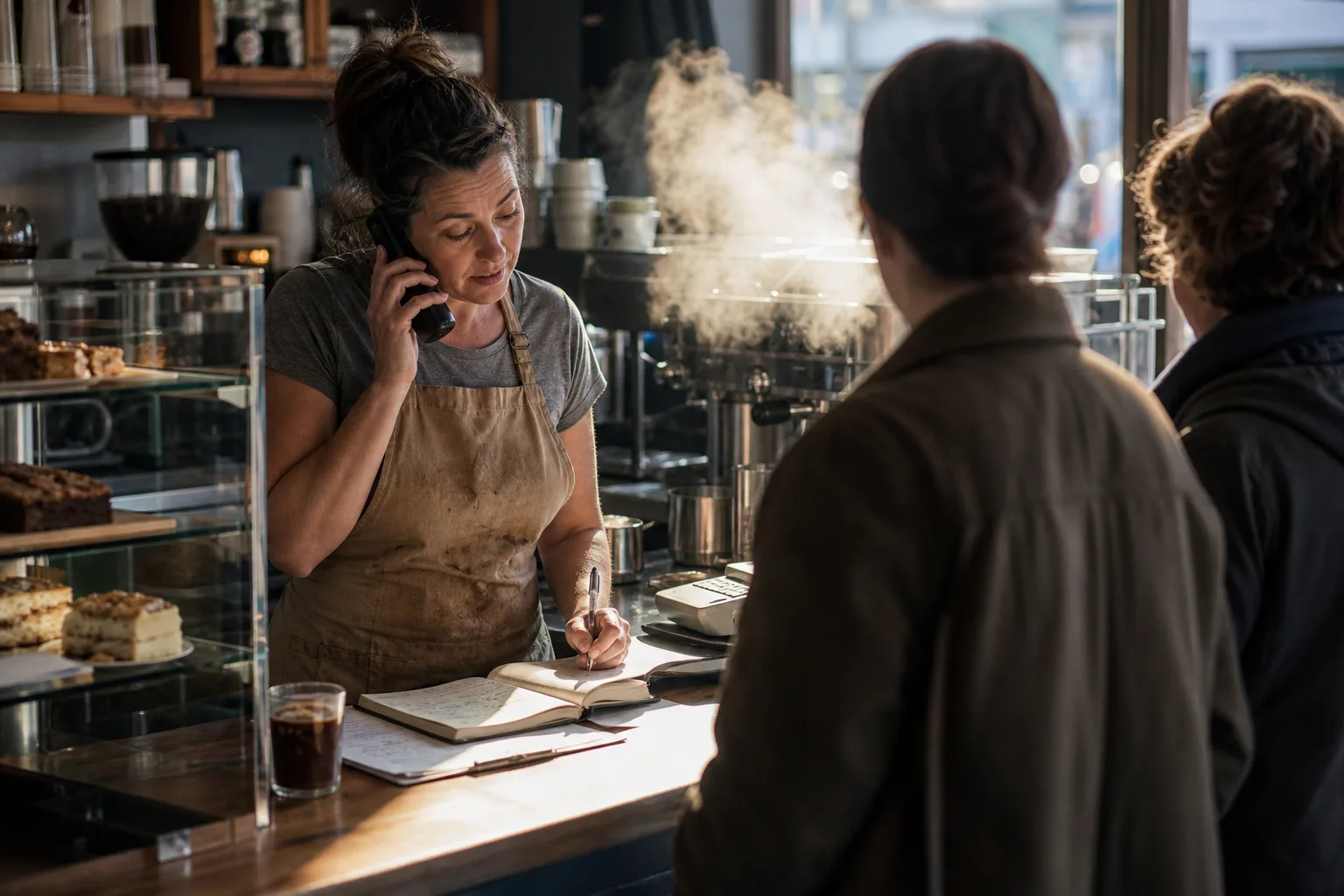
The default: you or your team answer between other tasks. It costs nothing extra but quality swings wildly depending on who's free and how their day's going.
Hiring a dedicated receptionist fixes consistency and gives callers a familiar voice. The trade offs are salary cost, sick days and holidays, and coverage that stops at 5pm. One person can also only take one call at a time.
Call handling services, call centres and virtual receptionists
So what is a call answering service? It's an outsourced team of real people who answer your calls using your greeting, take messages, and sometimes book appointments. A call handling call center does this at scale for many businesses; a virtual receptionist gives you a smaller, more personal version of the same idea.
Call handling as a service usually charges per call, per minute, or a monthly subscription with usage limits. It extends your coverage without hiring, but quality depends on how well the agents know your business, and busy periods can still mean queues.
The fourth option is an AI receptionist: software that answers every call with a human like voice, captures intent, qualifies leads and books appointments around the clock. It's typically a flat subscription, never busy, and identical on every call. You can see how an AI receptionist works step by step if you're curious about the mechanics.
Call handling best practices
These apply whether a human, a service or an AI answers your phone. Use them as an audit checklist for your current setup.
- Answer within a few rings. Three is a good target; after five, most callers are mentally composing their voicemail to your competitor.
- Use a consistent, branded greeting. Every caller should hear the business name and a warm, professional hello.
- Follow a loose script, not rigid wording. A structure keeps calls on track; word for word scripts sound robotic.
- Qualify and prioritise. Train whoever answers to spot urgent or high value calls and escalate them fast.
- Capture caller details every time. Name, number, reason for calling. No exceptions, even for 'just a quick question'.
- Confirm next steps before hanging up. 'So I'll book you in for Tuesday at ten, and you'll get a text confirmation.'
- Log every call. A shared record beats memory and sticky notes, and it shows you patterns over time.
- Review performance monthly. Check missed call counts, listen to a few recordings, and fix what's slipping.
The single highest impact habit: confirm next steps out loud before every call ends. It kills most 'I thought someone was going to call me back' complaints before they happen.
Common call handling challenges (and how to spot them)
Most small businesses don't have a call handling problem they can see. They have a slow leak. Here are the usual culprits.
After hours and weekend calls are the big one in New Zealand. Kiwi callers expect to reach a business when it suits them, which is often 7pm on a Tuesday or Saturday morning. If your phone goes to voicemail at 5pm, those callers go elsewhere.
Then there's overflow during busy periods, when everyone's already on a call or with a customer. Staff pulled away from real work to answer. Inconsistent quality between your best and worst call answerer. And the cost of dedicated cover, which is hard to justify until you add up what the missed calls were worth.
Quick self assessment. Ask yourself:
- How many calls hit voicemail each week? Check your phone logs; most owners are surprised.
- What happens when someone calls at 6pm, or on Sunday?
- How often is your team interrupted mid task by the phone?
- Can you see a record of every call from last month, with outcomes?
- Do two different staff members handle the same call the same way?
If those answers are uncomfortable, your setup is leaking opportunities.
Choosing the right call handling setup for your business
Match the option to four things: your call volume, the hours of coverage you need, how complex caller requests are, and the budget structure you prefer (salary, per minute billing, or flat subscription).
A solo tradie taking 5 to 10 calls a day, mostly while on the tools, usually can't justify a receptionist's salary. An AI receptionist or answering service that books jobs while they work tends to fit best.
A growing clinic with a busy front desk has a different problem: overflow at peak times and after hours booking requests. A hybrid works well here, with in house staff for walk ins and an automated or AI receptionist option catching everything the desk can't reach.
A professional services firm with complex, sensitive enquiries might keep a human first point of contact but still use 24/7 cover for message taking and urgent escalation. The point is that 24/7 coverage no longer requires night shift headcount. If you're weighing up the categories, this comparison of receptionist and answering options lays out the trade offs side by side.
Frequently asked questions
What is call handling in simple terms?
Call handling is the complete process of managing a business phone call from start to finish: answering promptly, greeting the caller, working out what they need, resolving or routing the request, and recording the outcome. It covers everything around the call, not just the act of picking up the phone.
What is the difference between call handling and a call answering service?
Call handling is the process itself; a call answering service is one way of getting it done, by outsourcing your calls to an external team. You can handle calls in house, through an answering service, or with an AI receptionist. The process is the same either way.
What is the difference between inbound and outbound call handling?
Inbound call handling covers calls coming into your business, like enquiries, bookings and support requests. Outbound is your business dialling out, for sales calls, reminders or follow ups. Most small businesses focus on inbound, because that's where new revenue arrives.
What does a call handling service actually do for a business?
It answers your calls using your business's greeting, captures the caller's details and reason for calling, takes messages, and often books appointments or transfers urgent calls. Good services also log every call so you have a record. The aim is that no caller ever hits voicemail or rings out unanswered.
How much does a call answering service cost?
Costs vary by provider and pricing model, so exact figures change often. The common structures are per call, per minute, or a monthly subscription with included usage. A dedicated in house receptionist is priced as a salary instead. Compare options on structure and coverage rather than chasing a single number.
How do I know if my business needs a call handling service?
Check your missed call count for a typical week and ask what happens when someone rings after hours. If calls regularly hit voicemail, staff are constantly interrupted, or you have no record of who called and why, you're likely losing leads. That's the point where a service or AI receptionist usually pays for itself.