Best Phone Answering Service New Zealand (2026): AI vs Human Options Compared
If you're weighing up a phone answering service in New Zealand, here's the short answer: in 2026 you have two real options, human virtual receptionist services and AI receptionist services, and for most small businesses wanting every call answered around the clock at a predictable cost, an AI receptionist is now the strongest default. Human services still win for sensitive or complex calls.
This guide compares both honestly. You'll get a decision framework, a plain English breakdown of New Zealand pricing structures, an evaluation checklist, and a 7 day trial process you can run with any provider before you commit.
What a phone answering service does for your New Zealand business
A phone answering service answers your business calls when you can't. Someone (or something) picks up in your business name, handles the caller, and makes sure you never miss an enquiry. In 2026 the New Zealand market splits into two camps: human virtual receptionist services, where real people answer remotely, and AI receptionist services, where human like voice AI handles the conversation.
Core features: message taking, transfers, booking and lead capture. Any service worth paying for should handle five core jobs:
- Answering in your business name with a greeting you approve
- Taking accurate messages and delivering them by email, SMS or app
- Transferring urgent calls to you or your on call person
- Booking appointments straight into your calendar
- Capturing and qualifying new leads before they ring your competitor
If a provider can't do all five, keep looking.
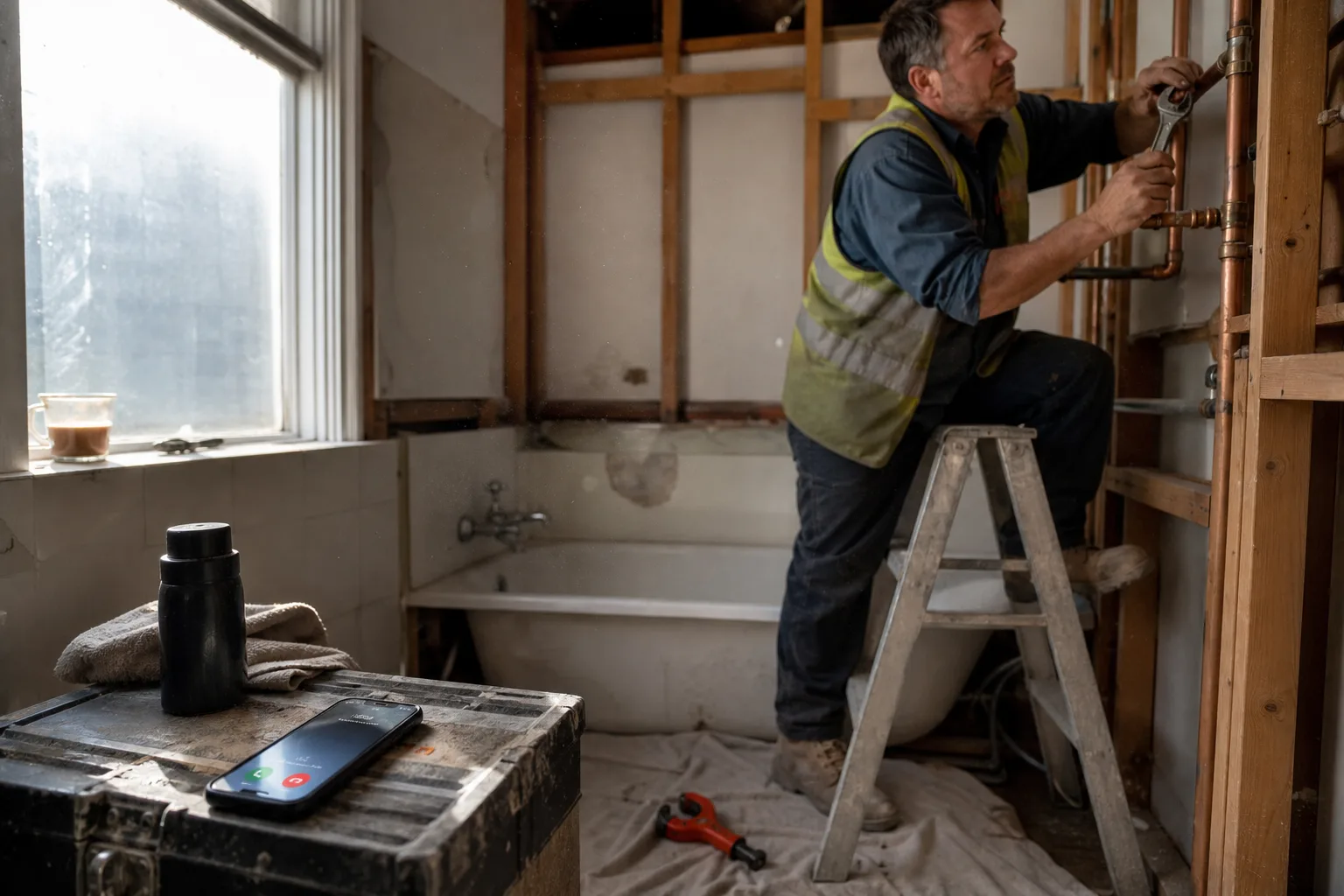
Why missed calls cost New Zealand small businesses real revenue. Do the maths on your own business. Say you're a tradie and you miss two job enquiries a week while you're on the tools. If one in four enquiries becomes a job worth $800, that's roughly $400 a week walking out the door, or over $20,000 a year. Callers rarely ring back. They ring the next name on the list.
AI vs human phone answering services: how to choose
This is the decision that matters most, so be honest about your call types before you compare prices.
Where human receptionists still win. Humans remain the better choice for emotionally charged or genuinely complex calls. Think distressed patients, sensitive legal intake, or complaints that need judgement and empathy. If a big share of your calls fit that description, a human virtual receptionist earns its premium.
The tradeoffs: human services bill per minute or per call, one operator handles one call at a time, and quality varies between operators and shifts.
Where AI receptionists now match or beat humans. Modern voice AI is nothing like the old phone trees from a few years ago. In 2026 a good AI receptionist holds a natural conversation, answers your FAQs, qualifies leads, and books directly into your calendar. It answers every call on the first ring, handles ten calls at once, works public holidays without surcharges, and usually costs a flat monthly fee. For a deeper look at the mechanics, see how an AI receptionist actually works.
Ask yourself four questions: How many calls do I get? How complex are they? What hours do I need covered? What's my budget? High volume, routine calls, 24/7 need, tight budget points to AI. Low volume, sensitive calls, business hours only points to human.
What a phone answering service costs in New Zealand
No provider advertises a single price that fits everyone, because billing structures differ wildly. Understanding the structure matters more than the headline number.
Common pricing models and what to watch for:
- Flat monthly plans: one fee for a set allowance or unlimited answering. Common with AI services.
- Per minute billing: you pay for every minute an operator spends on your calls, including hold time.
- Per call billing: a fixed charge per answered call, sometimes with message fees on top.
- Setup fees and lock in contracts: some human services charge onboarding fees and tie you in for months.
- After hours surcharges: evenings, weekends and public holidays often cost extra with human providers.
That last point stings in New Zealand, where a tradie's emergency calls land on Sunday mornings and public holidays.
How to estimate your real monthly cost. Worked example: you get 150 calls a month, averaging 3 minutes each. On per minute billing that's 450 minutes of charges, plus any surcharges for the 40% of calls that arrive after hours. On a flat AI plan, the same 150 calls cost the same every month whether they arrive at 10am or 2am. Check Callacy's pricing page to see what flat rate AI answering looks like, then compare it against quotes for your actual call volume, not the provider's cheapest advertised tier.
Also weigh the break even point against hiring. Even a part time receptionist costs far more per month than any answering service, and still only covers business hours.
What to look for when comparing New Zealand answering services
Use this checklist on any provider, AI or human. It filters out most of the market quickly.

New Zealand based vs offshore answering. Kiwi callers notice accents, and they notice when an operator doesn't know that Whangarei is north of Auckland or how to pronounce Tauranga. Some New Zealand providers answer locally; others route calls offshore. Ask directly where calls are answered. With AI, the equivalent question is whether the voice sounds natural to Kiwi ears and handles local place names. Answers New Zealand, a call answering specialist that's 100% New Zealand owned and operated with over 60 years supporting Kiwi businesses, built its whole reputation on local answering, which tells you how much this matters to callers here.
Contracts, trials and integrations. Run every shortlisted provider through this list:
- No lock in contracts and a genuine free trial
- 24/7 coverage including New Zealand public holidays, with no surcharges
- Integrations with your calendar, CRM or practice management software
- Simple call forwarding from your existing landline, mobile or 0800 number
- Fast message delivery by email, SMS or app
- Setup measured in minutes or days, not weeks
On that last point, AI services typically win outright: you can often be live the same day.
Which option fits your type of business
Different businesses have different call patterns, so match the service to your reality.
Trades and services. If you're a sparky, plumber or builder, your problem is answering while you're on the tools, plus after hours emergency calls. AI fits best here: it captures every job enquiry, books quotes into your calendar, and handles the 9pm hot water cylinder call without surcharge rates. A human service works too, but per minute billing on emergency calls adds up fast.
Clinics, professional services and other SMEs. Clinics and healthcare practices mostly need appointment booking and reduced reception load. AI handles routine booking and rescheduling well, but if your patients are often distressed or elderly, a hybrid approach (AI for routine calls, humans for the rest) is worth considering.
Law firms, accountants and agencies need a polished first impression and lead qualification. Either option works; AI wins on cost and consistency, humans on nuance for high value intake calls. For most other small and medium businesses with routine enquiries, AI is the practical default in 2026.
How to trial and switch without disrupting your business
You can test any service properly in a week without changing your phone number or risking a single call.
- Audit your missed calls for a week. Check your phone's call log and count what you're actually missing and when.
- Shortlist two or three services, ideally including one AI and one human option.
- Set up conditional call forwarding from your existing number, so calls only overflow when you're busy or closed. Nothing changes for callers.
- Write or review the call script: greeting, key questions, booking rules, what counts as urgent.
- Run a 7 day trial on live calls.
- Test with real scenarios: a booking request, an urgent call, a wrong number, a caller with a strong accent.
- Review call recordings or transcripts before committing.
Score each trial on four things: answer speed, accuracy of details taken, caller experience, and message quality. Any provider that won't let you trial properly is telling you something.
Is a phone answering service worth it?
You have three real alternatives. Do nothing and keep missing calls: fine only if missed calls genuinely cost you nothing, which is rare. Hire reception staff: makes sense when call volume justifies a salary and you need someone physically present. Outsource to an answering service: the middle path that covers every call for a fraction of a wage.
For most New Zealand small businesses wanting 24/7 coverage at a predictable cost, an AI receptionist is now the strongest default. Human services remain the right call for sensitive, high empathy conversations. If you're still unsure, the AI versus human receptionist comparison lays out the differences side by side, and the Callacy AI receptionist for New Zealand businesses page shows what the AI option looks like in practice.
Frequently asked questions
How much does a phone answering service cost in New Zealand?
It depends on the billing model. Human services typically charge per minute or per call, often with setup fees and after hours surcharges, so your bill scales with call volume. AI services usually charge a flat monthly fee. Estimate your monthly calls and average call length, then compare quotes on that basis rather than headline rates.
What is the difference between an AI answering service and a human virtual receptionist?
A human virtual receptionist is a real person answering your calls remotely, billed by time or per call. An AI receptionist uses human like voice AI to hold natural conversations, book appointments and qualify leads, usually for a flat fee. AI answers unlimited simultaneous calls 24/7; humans handle sensitive or complex calls with more empathy.
Is an answering service worth it for a small business?
Usually yes, if you miss calls that would have become paying work. Tally your missed calls for a week and multiply by your conversion rate and average job value. If that number beats the monthly service fee, it pays for itself. It's almost always cheaper than hiring even part time reception staff.
Will callers know they are talking to an AI or an offshore operator?
With offshore call centres, callers often notice accents and unfamiliarity with local place names. Modern voice AI sounds natural and conversational, and many callers can't tell. Either way, ask any provider where calls are answered and listen to real call recordings before you sign up.
Can an answering service book appointments directly into my calendar?
Yes, most modern services can, both AI and human. Check that the provider integrates with the calendar, CRM or practice management software you already use, and test a real booking during your trial to confirm it lands correctly with the right details.
Do New Zealand answering services lock you into contracts or offer free trials?
It varies. Some human services charge setup fees and require minimum terms, while most AI services offer no lock in contracts and free trials. Whatever you choose, insist on a trial period with live calls and check the cancellation terms before signing anything.