Answering Service Companies in New Zealand: How to Choose the Right One in 2026
If you're comparing answering service companies, the short answer is this: pick the provider whose model matches your call volume, your hours, and the complexity of your calls, then prove it with a trial before you sign anything. Everything else is detail.
This guide walks through what these services actually do, how human and AI options differ, how New Zealand pricing models affect your real bill, and the exact questions to ask on a sales call. It's written for Kiwi small and medium business owners who are ready to buy, not just browse.
What answering service companies do (and why businesses use them)
An answering service company answers your business calls when you can't. That's the whole pitch, and for a busy owner it's a big one. Instead of ringing out or hitting voicemail, your callers reach a receptionist (human or AI) who acts on your behalf.
You're not really buying call answering. You're buying availability and lead capture, so every person who rings you gets a response and a next step.
Core services: message taking, transfers, and appointment booking
- Message taking: the receptionist captures the caller's name, number, and reason for calling, then sends it to you by text or email.
- Call transfers: urgent or high value calls get patched through to you or your team in real time.
- Appointment booking: the service books jobs or consultations straight into your calendar, so the caller hangs up with a time locked in.
- After hours and 24/7 cover: calls outside business hours get answered instead of going to voicemail.
- 0800 number support: many providers can answer calls to a toll free New Zealand number, which suits businesses serving customers nationwide.
The real cost of missed calls for a small business
Missed calls are expensive because callers rarely wait. Data from BIA Advisory Services shows 85% of callers who hit voicemail never call back. They ring the next name on the list, which is usually your competitor.
And a surprising share of calls arrive when you're closed. The same BIA Advisory Services data found 40% of calls to small businesses arrive outside 9 to 5 hours. If you're a one person operation or a small team, that's a lot of opportunity landing while you're on a job, with a client, or asleep.
The two types of answering service company: human vs AI
Every answering service company in New Zealand runs on one of two models: live human receptionists working remotely, or an AI receptionist that answers with a human like voice. Neither is automatically better. They suit different call patterns, and being honest about that will save you money.
Live virtual receptionist services
A live service employs real people, often in a call centre, who answer using your business name and a script you approve. Humans shine on complex, emotional, or unusual calls: a distressed customer, a complaint with history, a caller who doesn't fit any script.
The trade offs are cost and concurrency. You're paying for a person's time, so pricing usually scales with minutes or calls. And at peak times, if every receptionist is busy, your caller may wait in a queue or reach a less familiar agent.
AI receptionist services
An AI receptionist answers instantly, every time, and can handle unlimited calls at once. There's no queue at 8am on a Monday. It books appointments, qualifies leads, and answers common questions consistently, because it never has an off day. Pricing is typically a flat monthly subscription, which makes budgeting simple.
The honest limitation: AI handles structured conversations well but can struggle with highly emotional callers or genuinely strange requests. A good AI service knows when to hand off or take a detailed message rather than bluffing through. If most of your calls are bookings, enquiries, and lead capture, AI fits. If your calls are routinely sensitive or unpredictable, a human may still be worth the premium. The Callacy comparison page breaks down how the two models stack up side by side.
How answering service pricing works in New Zealand
Pricing is where buyers get stung, so learn the models before you compare quotes. Most New Zealand answering service companies charge in one of four ways.
- Per minute: you pay for receptionist talk time. Watch for rounding: some providers round every call up to the nearest 30 or 60 seconds, so a 20 second call bills as a full minute.
- Per call: a fixed charge per answered call, regardless of length. Simple, but short wrong number calls cost the same as a five minute booking.
- Flat monthly subscription: one fee for a set of features or unlimited answering. Common with AI services. Predictable, and usually the cheapest option at higher volumes.
- Bundled minutes: a monthly plan with an included block of minutes, then overage rates beyond it. Fine if your volume is steady, painful if it spikes.
Match the model to your volume. Under roughly 30 calls a month, per call or a small bundle can work. Above that, per minute billing climbs fast and a flat plan usually wins. If your calls are long (think detailed service enquiries), avoid per minute entirely. Always ask for a sample bill based on your real call volume, not the headline rate.
Quick maths test: take last month's call count and average call length, then price it under each model. The cheapest headline rate is often the most expensive real bill.
How to compare answering service companies: a buyer's checklist
Once you've shortlisted a few providers, judge them on the same criteria. Availability comes first: do they genuinely answer 24/7, or is after hours cover an add on? Then caller experience. Ring them yourself and listen to the voice, the pace, and how naturally the conversation flows.
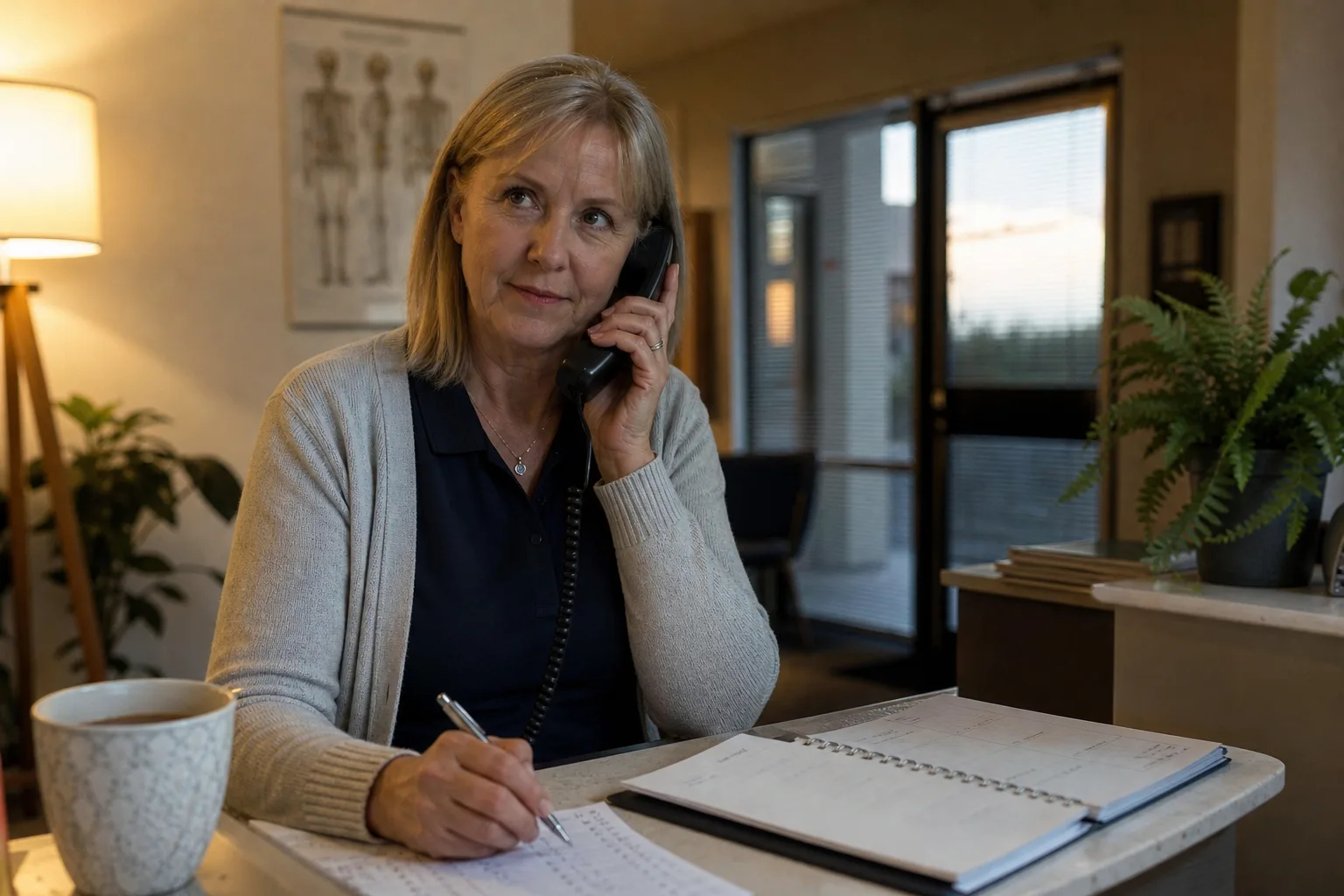
Next, check industry familiarity (a clinic's calls differ from a plumber's), integrations with your calendar and customer management tools, how they escalate urgent calls, setup time, and contract terms. Billing transparency matters too: you should be able to see exactly what each call cost you.
Questions to ask before you sign
- Do you round call time up, and to what increment?
- What happens when call volume spikes? Is there a queue or overflow?
- How do you handle an urgent call, and how fast am I notified?
- Can you book directly into my calendar, and which calendar systems do you support?
- How is my caller data stored, and who can access it?
- How long does setup take, and what do you need from me?
- What's the notice period to cancel, and are there exit fees?
Red flags to watch for
- Per minute rounding that inflates short calls into full minutes.
- Long lock in contracts with hefty early exit fees.
- Vague answers about where your call recordings and customer data live.
- No free trial or demo, so you can't test caller experience first.
- After hours cover priced as an expensive extra rather than included.
- A sales rep who can't show you a real sample invoice.
Which businesses benefit most from an answering service
Almost any business that lives on inbound calls gains from never missing one, but a few industries get outsized value.
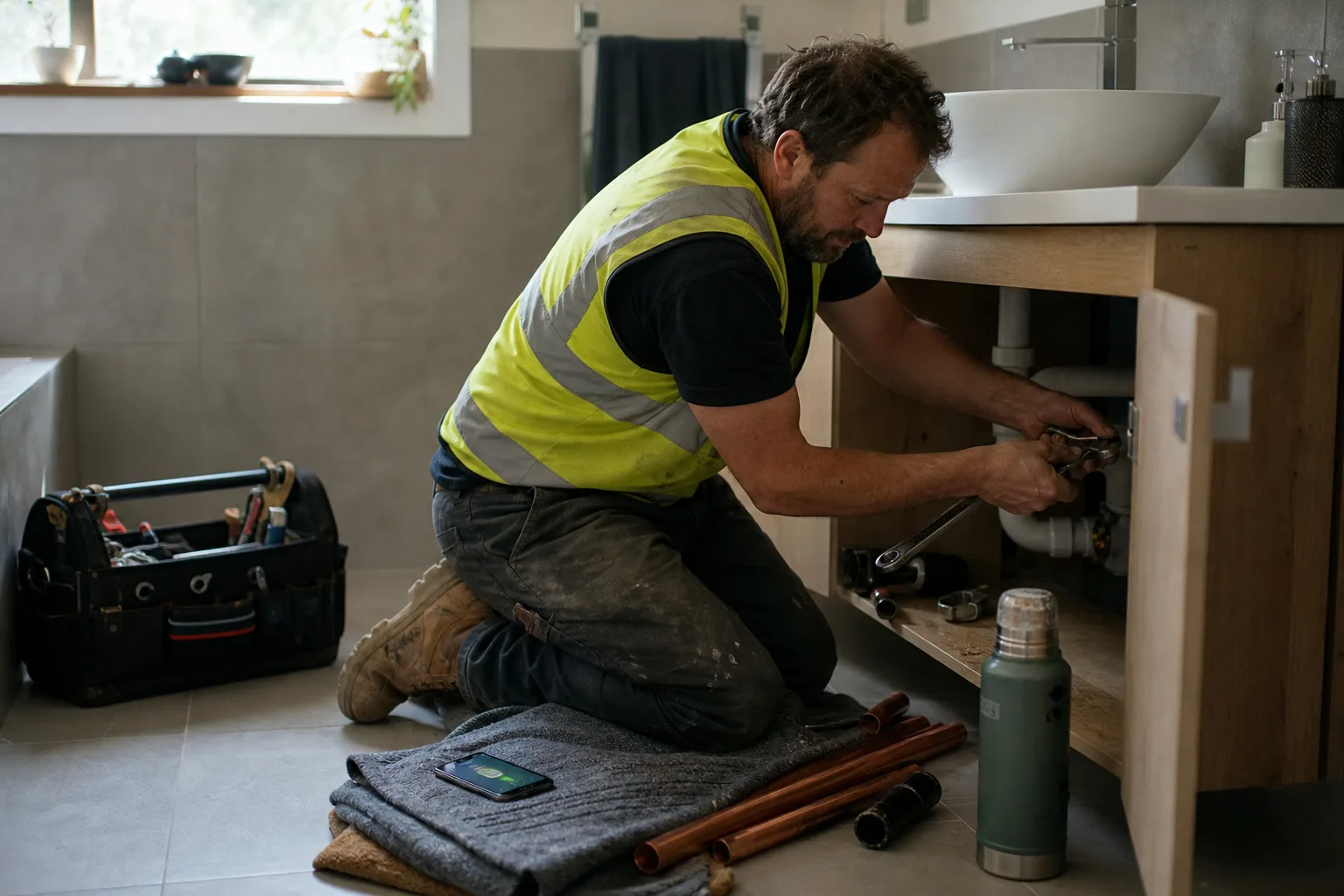
- Trades and home services: sparkies, plumbers, and builders are mid job when the phone rings, and callers want someone now. The feature that matters most is emergency dispatch: urgent calls get escalated to your mobile while routine ones get booked or messaged. The demand is real: data from On Call Centre shows 92% of customers call for appliance repair and 82% call when looking for an electrician during their purchase journey.
- Medical and allied health: clinics need appointment booking above all, plus careful, professional handling of patient enquiries.
- Legal and accounting: new client enquiries are high value and time sensitive, so lead capture and prompt message delivery matter most.
- Property management: a mix of tenant maintenance calls (some urgent) and prospective tenant enquiries, so triage and escalation are key.
- Solo operators: if you are the business, every unanswered call is a job you never knew about. Full time cover without hiring anyone is the draw.
How to trial an answering service before committing
Never sign a year long contract untested. Any confident provider offers a free trial or demo period, and two weeks is enough to know if it works.
- Make test calls at different times. Ring at 8am, lunchtime, and 9pm. Note how fast it answers and how the conversation feels.
- Check message accuracy. Leave a detailed message with a name, number, and request. Did it arrive correctly, and how quickly were you notified?
- Run an urgent scenario. Simulate an emergency call and confirm it escalates to the right person fast.
- Test a real booking. Have a friend book an appointment and watch it land in your calendar with the right details.
- Review the notifications. Are messages readable, complete, and sent where you actually look (text, email, app)?
After two weeks, good looks like this: every call answered, messages accurate, bookings landing correctly, and zero complaints from real callers. If you're chasing the provider for fixes in week one, walk away.
Choosing the right fit for your business
Pull it together with four questions. How many calls do you get? How complex are they? Do you need a predictable bill? And what hours must you cover?
Low volume with sensitive, unpredictable calls points to a live human service. High volume, routine calls (bookings, enquiries, lead capture) with a need for 24/7 cover and a flat bill points to AI. Many New Zealand small and medium businesses sit firmly in the second camp.
That's the gap Callacy was built for. It's an AI receptionist for New Zealand businesses that answers every call 24/7, books appointments, and qualifies leads at a flat rate, so you're not watching the clock on per minute billing. You can see how it works step by step, or check the pricing structure to see if it matches your call pattern. Whatever you choose, trial it first and let real calls make the decision for you.
Frequently asked questions
What does an answering service company actually do?
It answers your inbound business calls when you can't, using either live remote receptionists or an AI receptionist. Core services include message taking, call transfers, appointment booking, lead capture, and after hours or 24/7 coverage. The goal is that every caller reaches a response and a next step instead of voicemail.
How much does an answering service cost in New Zealand?
Costs depend on the pricing model: per minute, per call, bundled minutes, or a flat monthly subscription. Per minute and per call plans suit low volumes but climb quickly as calls grow, while flat subscriptions are predictable and usually cheaper at higher volumes. Ask each provider for a sample bill based on your real call count before comparing.
What is the difference between a live answering service and an AI receptionist?
A live service uses real people, which suits complex, emotional, or unusual calls but costs more and can queue at peak times. An AI receptionist answers instantly, handles unlimited simultaneous calls, and usually charges a flat monthly rate, but can struggle with highly sensitive or unpredictable conversations. Your call volume and call type decide which fits.
Will callers know they are not speaking to someone in my office?
Usually not. Both human and AI services answer with your business name and follow your script, and modern AI voices sound natural and conversational. Most callers care that someone answered promptly and helped them, not where that someone sits. Test it yourself during a trial to judge the experience first hand.
Can an answering service book appointments directly into my calendar?
Yes, most modern services integrate with common calendar and booking systems so appointments land directly in your schedule. During a trial, have someone book a test appointment and confirm the details arrive correctly. Also ask which specific calendar platforms the provider supports before signing.
Are answering service contracts locked in, or can I cancel anytime?
It varies widely. Some providers offer month to month plans you can cancel with short notice, while others push long contracts with early exit fees. Treat a long lock in with no trial as a red flag, and always confirm the notice period and any cancellation costs in writing before you commit.