Best 24/7 Call Answering Service for Australian Businesses: How to Choose the Right Fit
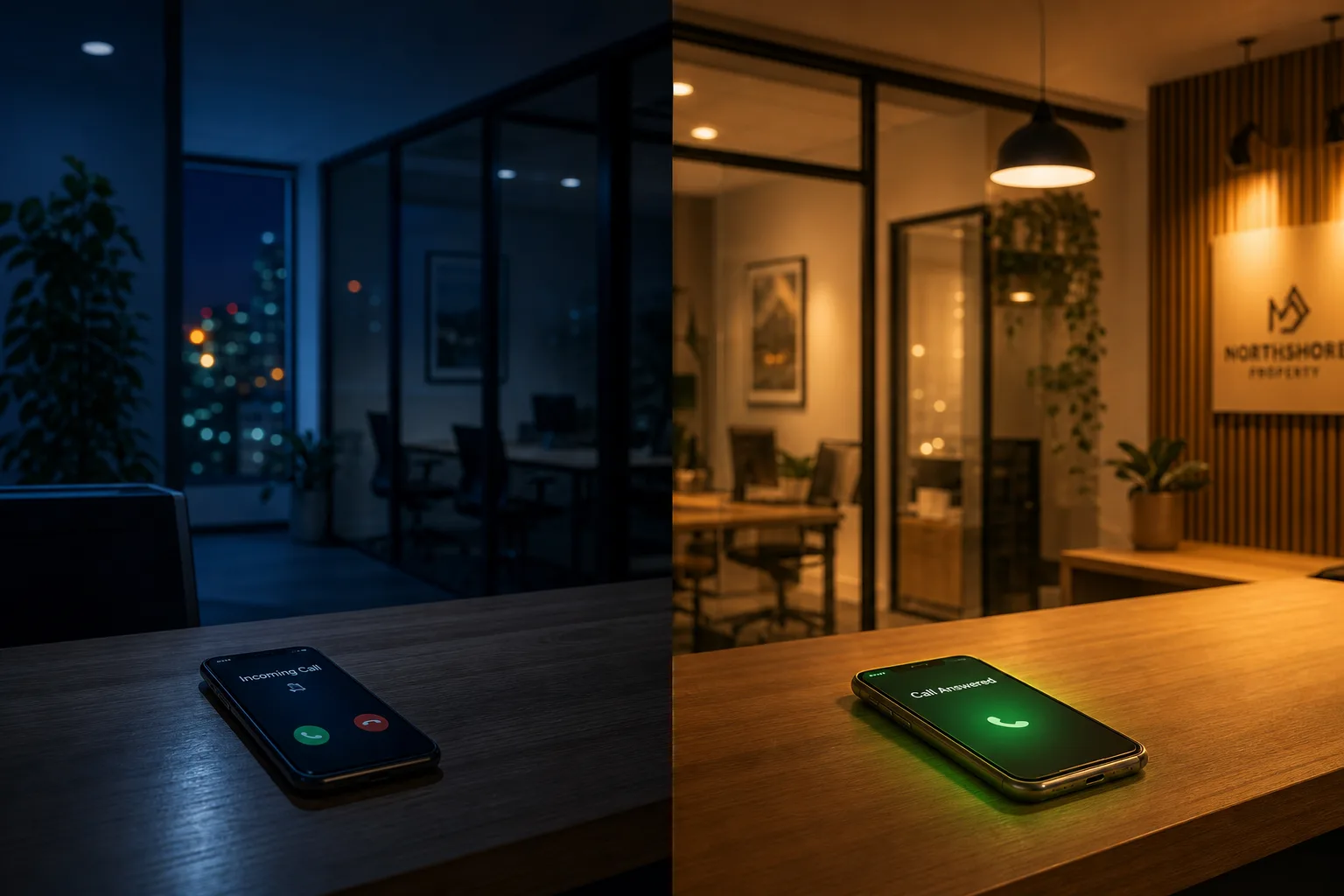
Choosing the best 24/7 call answering service comes down to three things: how complex your calls are, how predictable you need your costs to be, and how fast you want to go live. This guide gives you a clear framework to decide.
It covers both human-staffed and AI-powered models, compares real providers, and ends with a six-point checklist you can use on any service before you sign up.
Why Round-the-Clock Call Answering Matters for Australian SMBs
Round-the-clock call answering matters because missed calls translate directly to lost revenue: a caller who reaches voicemail typically moves on to the next result. Enquiries go cold quickly after that first missed call. For Australian SMBs competing in local markets, giving a caller no answer is often the same as handing the job to someone else.
The real cost of a missed call
Think about a tradie who misses three calls on a Saturday afternoon. At even a modest job value, that's a meaningful chunk of weekly revenue gone. For a GP clinic, it could be a patient booking with a practice down the road. For a real estate agent, it could be a hot buyer who found another agent.
The revenue loss compounds when you factor in the cost of acquiring a new lead in the first place. Advertising, referrals, and SEO all cost money. Letting those leads ring out wastes that investment.
Why business hours no longer match customer expectations
Customer expectations no longer align with 9-to-5 business hours because Australians increasingly search and call in the evening, on weekends, and early mornings. A 24/7 answering service bridges that gap without keeping staff on the clock around the clock.
- Evenings: post-work browsing often leads straight to a call.
- Weekends: tradespeople, clinics, and bookings are searched heavily on Saturdays and Sundays.
- Public holidays: emergencies and last-minute bookings don't respect the calendar.
Two Models, One Goal: Human Receptionists vs AI Voice Agents
Both human-staffed services and AI-powered services aim to answer your calls professionally and handle them correctly. They just do it very differently, and understanding how each works is what helps you pick the right one.
Best 24/7 Call Answering Service Models: Human Receptionists vs AI Voice Agents
Both human-staffed services and AI-powered services aim to answer your calls professionally and handle them correctly. They just do it very differently, and understanding how each works is what helps you pick the right one.
How human-staffed answering services work
Human-staffed telephone answering services route your calls to live receptionists who answer in your business name, follow a script you provide, take messages, and transfer calls according to your escalation rules. It's a familiar model and can feel warm and personal.
- Calls answered by a live professional receptionist.
- Scripts and escalation rules set by you.
- Billing per minute or per call.
- Capacity limited by rostered staff.
Where each model performs best
| Situation | Human service | AI service |
|---|---|---|
| High-empathy calls (e.g. mental health, complex complaints) | Strong fit | Less ideal |
| High call volume with simultaneous peaks | Can queue | Handles all calls at once |
| Predictable monthly budget | Variable billing | Fixed subscription |
| 24/7 without overtime costs | Expensive | Standard |
| Industry-specific scripting and booking | Possible but slow to update | Configurable quickly |
| Routine enquiries and appointment booking | Works well | Works well |
For most Australian SMBs dealing with routine inbound calls, appointment bookings, and after-hours coverage, AI voice agents offer comparable capability at a significantly lower and more predictable cost than fully human-staffed services.
Core Features Any 24/7 Answering Service Must Have
Whether you're evaluating a human service or an AI platform, these are the features that actually move the needle. Use this as your baseline checklist when comparing 24/7 answering services for small businesses.
Message capture and delivery
Every call that doesn't result in a transfer or booking needs a clear message delivered to the right person. Look for services that send messages via SMS, email, or app notification instantly, not in a batch at the end of a shift. Delayed messages mean delayed callbacks, which is where leads go cold.
Call routing and escalation to the right person
Not every call is urgent, but some are. A burst pipe, a medical emergency, a property settlement issue: these need immediate escalation to a real person. Any service you choose must have clear escalation logic that you control. Check whether you can set different rules for different times of day or call types.
Appointment booking and lead qualification
If a caller wants to book an appointment, an answering service that only takes a message is leaving money on the table. Look for AI appointment booking that integrates with your existing calendar or practice management software. Lead qualification, asking the right questions before routing or booking, saves your team time and filters out tyre-kickers.
Industry-specific handling
A dental clinic's calls are nothing like a plumbing company's calls. The questions, urgency signals, booking workflows, and terminology are all different. The best services let you configure those specifics upfront rather than offering a generic script. This is especially relevant if you operate in healthcare, trades, real estate, or automotive.
Understanding 24/7 Call Answering Costs
Cost is often the deciding factor, and it's where the two models diverge most sharply. Understanding how you're being charged helps you avoid bill shock and pick the right structure for your call volume. For a deeper breakdown, the cheapest call answering options for small businesses guide is worth reading.

Per-minute and per-call billing explained
Most human-staffed answering services charge per minute of receptionist time or per call handled. Pricing tiers often come with a monthly minute allowance, after which overage rates apply. This model works if your call volume is low and predictable, but it can bite you during busy periods when calls spike.
Flat-rate subscription models
AI-powered services typically charge a flat monthly subscription. You know exactly what you're paying each month regardless of call volume. For businesses with variable or growing call volume, this is a meaningful advantage: there's no penalty for being busy.
What drives the price difference between human and AI services
Human services carry the cost of staff wages, training, shift premiums, and management overhead. Those costs are real and they flow through to your bill. AI services replace most of that operational overhead with software infrastructure, which is why the per-call cost is typically much lower. The trade-off, as noted above, is that AI handles routine calls very well but isn't the right tool for every complex or sensitive conversation. See Callacy's pricing page for how subscription tiers are structured.
Which Type of Business Gets the Most Value?
24/7 call answering isn't equally valuable across every industry. These three sectors tend to see the clearest return.
Trades and home services
Plumbers, electricians, HVAC technicians, and locksmiths get emergency calls at all hours. Missing one of those is a direct revenue loss and a customer service failure. An AI receptionist for plumbing businesses or HVAC companies can triage urgency, book jobs, and escalate genuine emergencies without a human on call.
Healthcare and allied health
Dental clinics, physio practices, podiatrists, and vets deal with high appointment volumes and patients who call outside clinic hours. An AI agent can book, reschedule, and confirm appointments around the clock, reducing front desk workload during the day and capturing bookings that would otherwise be lost overnight. See how this applies to dental practices and physiotherapist clinics specifically.
Real estate and automotive
Buyers and renters call at odd hours when they're browsing listings. Car wash and tyre shop customers often want to book early morning slots. In both sectors, the ability to answer, qualify, and book at any hour converts more enquiries into actual appointments or viewings without adding headcount.
How to Evaluate and Choose the Right Provider
Use this checklist before you sign up with any 24/7 call answering provider, human or AI.
A six-point checklist before you sign up
- True 24/7 availability: Does the service actually answer at 3am and on public holidays, or are there coverage gaps?
- Simultaneous call handling: Can it handle multiple calls at once, or do callers queue during busy periods?
- Booking integration: Does it connect to your calendar or booking system, or does it only take messages?
- Escalation logic: Can you define exactly which calls get patched through to you or your team, and when?
- Pricing transparency: Is billing per-minute with overages, or a flat monthly rate you can budget for?
- Setup speed: How quickly can it be configured and go live? Days or weeks?
Questions to ask any provider before committing
- What happens if two calls come in at the same time?
- Can I customise the script and call flow for my specific industry?
- How are messages delivered, and how quickly?
- What's the process if I need to change my escalation rules?
- Is there a trial period or minimum contract length?
Comparing the best AI phone agent services for small businesses side by side using this framework will quickly separate services that fit your needs from ones that don't.
Getting Started: What Setup Actually Looks Like
Setting up an AI voice receptionist is faster than most people expect. With a platform like Callacy, you start by configuring your agent: your business name, the questions it should ask, how it should handle different call types, and who to escalate urgent calls to. That configuration typically takes a day or two, not weeks.
You then forward your existing business number to the service, or port it across if you want to fully migrate. There's no need to change the number your customers already know. Once forwarding is live, the agent starts answering calls immediately.
Switching from a human answering service is equally straightforward. The main task is translating your existing call scripts and escalation rules into the AI configuration. Most businesses are live within a week. For more detail on what the process looks like, the how it works page walks through it step by step.
If you're currently using voicemail after hours, any answering service, human or AI, will be an immediate upgrade. The bar isn't high, but the revenue difference can be significant.
Frequently asked questions
What is the best 24/7 call answering service for a small business in Australia?
The best option depends on your call volume, budget, and how complex your calls are. AI-powered services like Callacy suit businesses with routine inbound calls, appointment bookings, and a need for predictable pricing. Human-staffed services suit businesses where calls require significant empathy or nuanced judgement. Read the best virtual answering services guide for a broader comparison.
How much does a 24/7 call answering service cost?
Human-staffed services typically charge per minute or per call, with monthly costs varying based on volume. AI services usually offer flat monthly subscriptions, which makes budgeting easier. Costs vary significantly between providers and plan tiers. Check the Callacy pricing page for specific subscription options.
What is the difference between a live answering service and an AI answering service?
A live answering service uses human receptionists working in shifts to answer your calls. An AI answering service uses voice AI to handle calls automatically. Live services can feel more personal but come with variable costs and capacity limits. AI services handle unlimited simultaneous calls at a fixed cost but are better suited to structured, routine call types.
Can a call answering service book appointments for my business?
Yes, many can, but not all. Look specifically for services with calendar integration that can confirm bookings in real time rather than just taking a message for a callback. Callacy's AI appointment booking connects directly to your scheduling system so the caller leaves with a confirmed booking.
What happens to calls after hours if I use a call answering service?
Your business number is forwarded to the answering service, which picks up in your business name. Depending on your configuration, the service takes a message, books an appointment, answers common questions, or escalates urgent calls to a nominated contact. Callers typically don't know they've reached a third-party service.
Which industries benefit most from 24/7 call answering?
Trades and home services (plumbing, electrical, HVAC, locksmithing), healthcare and allied health (dental, physio, vets), and real estate tend to see the clearest return. These sectors all have after-hours call volumes that carry real revenue or service consequences if missed. See industry-specific setups for electricians and dental clinics as examples.