AI for Tradies in Australia: What It Is and How It Actually Helps Your Business
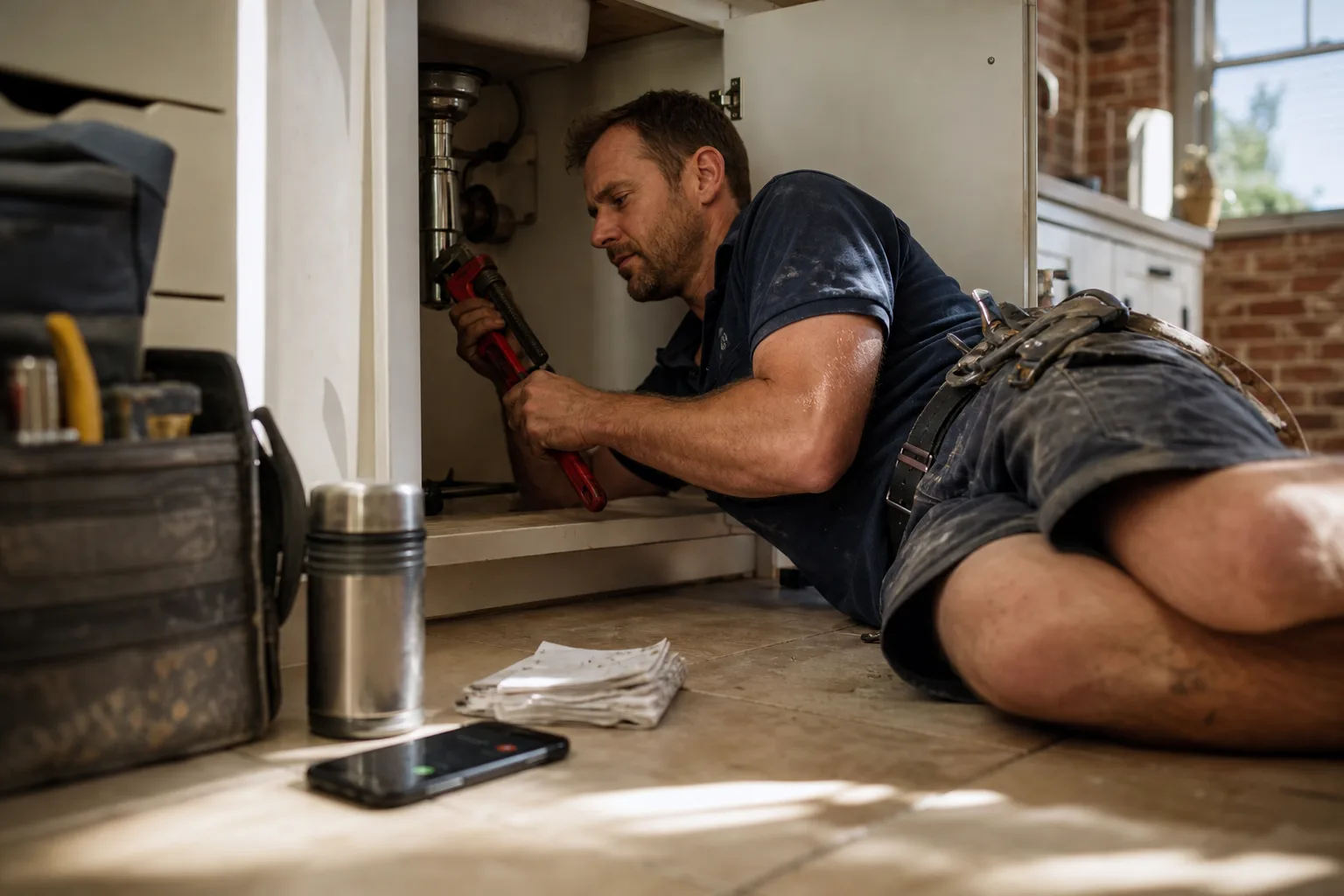
You keep hearing about AI for tradies. Australian trade businesses are apparently using it to answer phones, send quotes and chase invoices while they're on the tools. But what does that actually mean, and is any of it useful for a one man band or a small crew?
Short answer: yes, mostly. AI in a trade business handles the office work, not the trade work. It answers your phone when you can't, books jobs into your calendar, and follows up quotes you'd otherwise forget about.
This guide explains what it is, what it does day to day, what it costs in general terms, and where to start if you're curious but not keen on learning complicated software.
What Is AI for Tradies, Actually?
AI for tradies is software that runs the office side of your business using artificial intelligence. Think calls, bookings, quotes, invoices and follow ups. The stuff that normally eats your evenings.
Instead of you ringing back six people at 7pm, an AI receptionist answers the call while you're under a house, works out what the caller needs, and books the job. Instead of you typing up quotes on the couch, software drafts them from your price list.
It's not robots on the tools
Let's kill the biggest myth straight away. AI is not going to rewire a switchboard, rough in a bathroom or frame a deck. It can't crawl under a house or diagnose a dodgy hot water system. The physical work is yours, and that's not changing.
What AI touches is everything around the job: the phone call that books it, the quote that wins it, the invoice that gets you paid. It's an office hand, not an apprentice.
Why tradies are hearing about it now
Three things changed. Voice AI finally sounds like a person instead of a robot menu. The tools got cheap enough for small businesses. And the job management platforms many tradies already use now ship AI features built in.
The numbers back it up. National Australia Bank research found 42% of Australian small and medium enterprises already use AI, with time saved for the business or family the most commonly reported benefit. That's exactly what a trade business needs help with.
The Admin Work AI Takes Off Your Plate
Here's the core list. AI can answer your calls, book appointments, draft quotes, send invoices, chase overdue ones, request reviews after a job, and juggle your schedule. Most trade businesses start with one or two of these, not the whole lot.
Answering calls and booking jobs
This is the big one, and it's where I'd start. You're on the tools all day. Your hands are dirty, you're on a ladder, or you're mid conversation with a customer. The phone rings, you can't grab it, and the caller rings the next tradie on Google.
An AI receptionist that answers every call picks up 24/7, has a natural conversation, books the job into your calendar and texts you the details. Emergency at 9pm on a Saturday? It can flag urgent jobs and route them to your mobile.
Before AI, a sparky's day looks like this: four missed calls by smoko, two voicemail messages nobody left, and an hour of callbacks at night. After AI, those four callers are booked, confirmed by text, and sitting in tomorrow's schedule before lunch.
Quoting, invoicing and follow ups
Quoting is the second time sink. AI drafting tools pull from your standard rates and job notes to produce a quote you check and send, instead of writing each one from scratch. Automated quoting tools can also follow up quotes that have gone quiet, which is where a lot of jobs are won or lost.
Same story with invoices. AI sends them when the job's marked done, chases the overdue ones politely, and keeps your records tidy for tax time. Less Sunday night admin, more actual weekends.
How AI Works With the Software You Already Use
Fair question: is this yet another app to learn? Mostly, no. Modern AI tools are built to plug into what you've already got, not replace it.
A typical setup looks like this. Your AI receptionist answers a call and books the job straight into your existing calendar. The job details land in your job management platform or arrive by SMS and email. When the work's done, the invoice data flows into your accounting software, so your bookkeeper and the ATO stay happy without you retyping anything.
If you're already running job management software, AI job management for Aussie tradies builds on top of it rather than asking you to switch. And if you're running your whole business off a paper diary and a ute full of receipts, that's fine too. The AI becomes your system, and you check everything from your phone.
The point is you don't need to rip anything out. Start with one connection, like calendar sync for bookings, and add more only if they earn their keep.
Is AI Worth It for a One Man Band or Small Crew?
Honestly, sole traders often get the most out of it, because there's literally no one else to pick up the phone. A bigger crew might have an office person. You've got you, and you're busy.

The real cost of a missed call
Do the maths on your own business. How many calls do you miss in a week while you're on the tools? Five? Ten? Now ask what your average job is worth. Even if only one or two of those callers would have booked, that's real money walking to a competitor every single week.
Most callers won't leave a voicemail and won't ring back. They just dial the next result. Missed calls aren't an admin annoyance, they're lost jobs.
What AI setup typically looks like
Costs fall into three rough buckets. Free do it yourself tools you configure yourself, which cost time instead of money. Subscription services that charge a monthly fee and handle the technical side. And done for you setups where someone builds and maintains the whole thing.
For most tradies, a subscription is the sweet spot: predictable cost, no tinkering. You can see how AI phone agent pricing is structured in general terms before you commit to anything.
The test is simple. If missed calls, late night quoting or overdue invoices sting each week, one recovered job usually covers the monthly cost.
Common Worries Tradies Have About AI
Two objections come up every time I talk to tradies about this stuff. Both are fair, and both have straight answers.
"My customers want to talk to a real person"
Here's what I've seen: callers care far more about getting an answer and a booking than about who's talking. Voice AI in 2026 sounds natural, handles Aussie accents and slang, and doesn't put people on hold. What actually puts customers off is ringing three tradies and getting three voicemails.
Good systems also know their limits. Anything tricky, upset or urgent gets escalated to you straight away, with a summary of what's been said so far. The AI handles the routine 80%, you handle the rest.
"I'm not good with technology"
You don't need to be. A proper setup is done for you: someone configures the agent with your services, service area, pricing rules and calendar, then you just check bookings on your phone like you'd check a text.
And be honest with yourself about what AI won't do. It won't crawl under a house, and a complex renovation quote still needs your eye and your experience. AI handles the repeatable stuff so your brain is free for the work that actually needs it.
How Different Trades Are Using AI Right Now
Sparkies are capturing after hours emergency callouts. A switchboard fault at 10pm used to go to voicemail; now the AI answers, confirms it's urgent, books the callout and pings the on call sparky.
Plumbers are auto booking drain and leak jobs. The caller describes the problem, the AI asks the right questions (where's the leak, is water still running), and slots the job into the next available window. Storm season enquiries get handled even when the whole crew is flat out.
Builders and chippies are speeding up quote turnaround. AI drafts the first version from their rates and past jobs, they review and tweak it, and the quote goes out the same day instead of next week. Faster quotes win more work.
Landscapers are smoothing out seasonal spikes. When spring hits and the phone goes mad, the AI answers every enquiry, books site visits and captures details, so nobody gets lost in the rush. Same story for air con techs in the summer rush.
Where to Start: A Simple 3 Step Plan
- Pick your single biggest time waster. For most tradies it's missed calls, but for you it might be quoting at night or chasing invoices. One problem, one tool.
- Trial that one tool for a month and measure it. Count calls answered, jobs booked, or hours saved. If the numbers don't stack up, ditch it and try something else.
- Expand only once the first one sticks. Add quote follow ups or invoice chasing after call answering is humming, not before.
Starting small beats buying a full automation stack on day one. You'll actually use one tool that solves a real problem. Five tools you don't understand will just gather dust.
That's why an AI voice receptionist for tradies is the most common first step. It fixes the most expensive leak (missed calls), needs almost nothing from you day to day, and pays for itself with a single booked job.
Rule of thumb: if a task is repetitive, follows a script, and doesn't need your hands or your licence, it's a candidate for AI. Everything else stays with you.
Frequently asked questions
What is AI for tradies in Australia?
It's software that uses artificial intelligence to run the office side of a trade business: answering calls, booking jobs, drafting quotes, sending invoices and following up customers. It doesn't touch the physical trade work. Think of it as a cheap office hand that works 24/7 and never calls in sick.
How much time can AI save a tradie each week?
It depends where your time goes now. If you spend an hour a night on callbacks and quotes, that's five or six hours a week straight back. Add invoice chasing and scheduling and it climbs from there. The only way to know is to track one week of admin, then trial a tool and compare.
Will my customers be put off talking to an AI instead of a person?
Mostly no. Callers care about getting an answer and a booking, and modern voice AI sounds natural and handles Australian accents fine. What puts customers off is voicemail and unanswered phones. Good systems also escalate anything complex or urgent to you directly.
Do I need to be tech savvy to use AI tools?
No. Subscription services are set up for you: your services, pricing rules and calendar get configured, and you manage everything from your phone. If you can use texting and a calendar app, you can run an AI receptionist.
How much does AI cost for a trade business?
There are three general models: free do it yourself tools, monthly subscriptions, and done for you setups. Most tradies land on a subscription because it's predictable and someone else handles the tech. Check the pricing page for how plans are structured, and weigh it against the value of one or two recovered jobs a month.
Will AI replace tradies?
No. AI can't hold a spanner, and the physical, licensed work is staying with humans. What it replaces is the admin grind around the work. Interestingly, a Smart Company report noted AI related job ads still account for only 1.5% of total job ads on Seek, so the hype is well ahead of any actual displacement.