AI for Tradies in Australia: What's Actually Worth Your Money in 2026
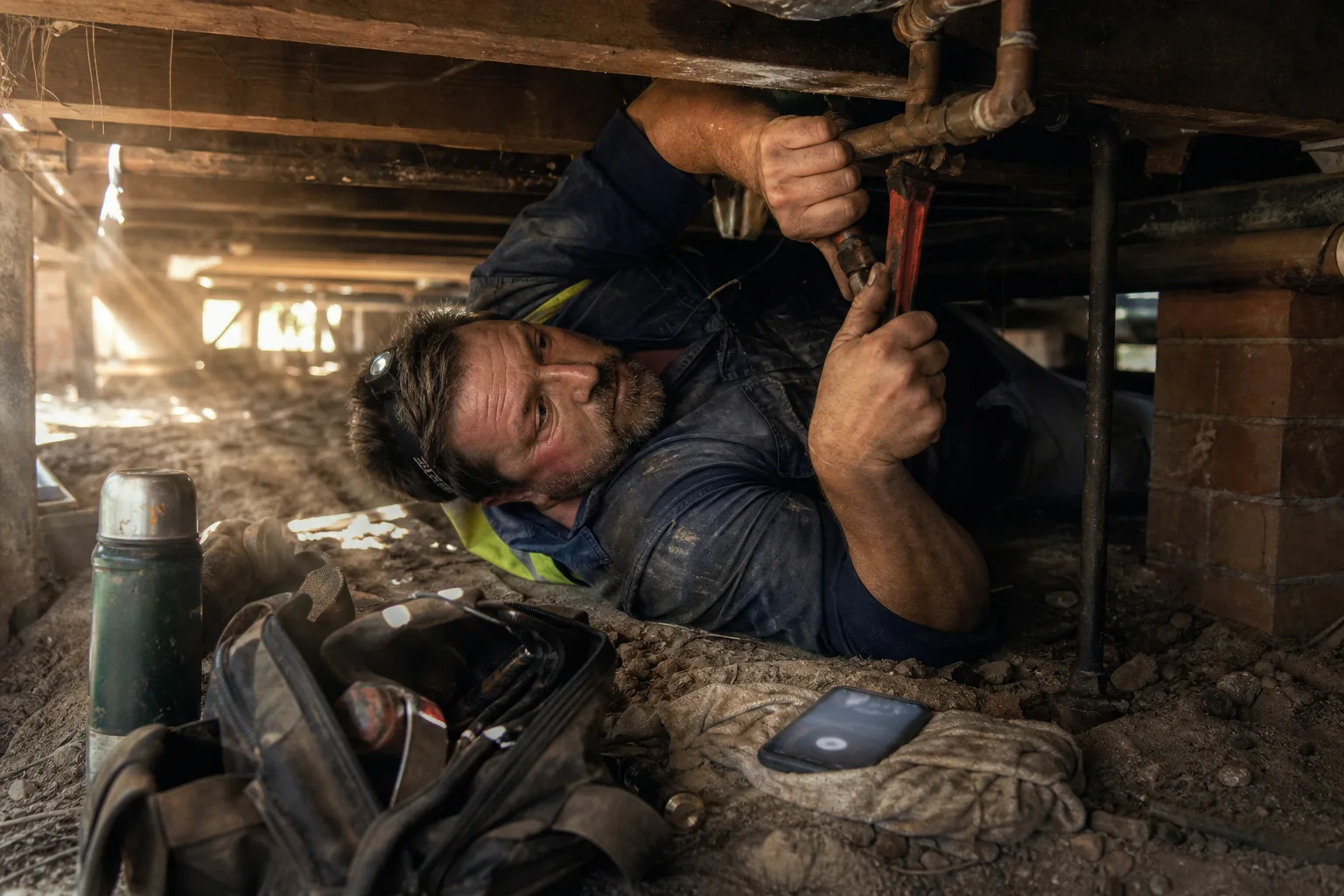
You're under a house, hands full, and your phone rings. That's a job you just missed, and it happens every week. AI for tradies in Australia has exploded as a search term because blokes are sick of losing work to whoever answers first.
This guide skips the hype. You'll get what AI genuinely does for a trade business in 2026, what it costs per month in AUD, what tradies on Reddit actually complain about, and a simple way to pick the right category before you spend a cent.
Why tradies are looking at AI right now
The pain is the same across every trade. You're on the tools all day, so calls go to voicemail and the caller rings the next name on Google. Evenings disappear into quoting. Invoices sit unpaid because chasing them feels like a second job.
Here's the honest version of where AI sits in 2026. It's genuinely good at answering calls, capturing job details, booking work, following up quotes and chasing invoices. It can't crawl under a house, judge a tricky switchboard or price a complex reno on its own. National Australia Bank research found 42% of Australian small and medium businesses already use AI, with time saved for the business or family the most commonly reported benefit. That's the realistic promise: hours back, not magic.
What AI can actually do for a trade business
Let's split this into what works now and what still needs you.
- Answering and capturing calls. An AI receptionist that answers every call picks up while you're on the tools, takes the caller's name, suburb, job type and urgency, and texts you the details.
- Booking and scheduling. It slots jobs into your calendar around existing bookings and buffers for travel time.
- Quote follow ups. It rings or texts people who haven't responded to a quote, which is where most jobs are won or lost.
- Invoice chasing and review requests. Polite, persistent, and it never forgets.
- Writing quotes and emails. AI writing tools draft the words; you check the numbers.
Where AI still falls short. Complex quoting needs your eyes. A like for like hot water swap is fine to automate; a renovation with hidden asbestos is not. On site judgement, upselling in person and calming a furious customer are still human jobs. Any tool that claims otherwise is selling you something.
The main types of AI tools for tradies, compared
Forget vendor lists. There are really four categories, and they suit different businesses.
DIY and free AI tools. General chatbots and writing assistants cost nothing to start with and handle quote drafts, emails and social posts well. The catch: you do all the setup and they can't answer your phone. Best for: sole traders testing the water on a zero budget.
Job management platforms with AI features. These combine scheduling, quoting and invoicing in one app, with AI layered on top for things like auto replies. Powerful, but expect a learning curve and per user pricing that climbs as you add staff. Best for: teams of 3 or more who want one system for everything.
AI voice receptionists. These answer your actual phone line 24/7, capture job details and book work in an Aussie accent, with setup mostly done for you. Best for: tradies whose biggest leak is missed calls, which is most of them. Done for you custom setups wire AI into your whole workflow. Best for: established businesses with messy systems and budget to match.
What AI costs a tradie per month in Australia
The ai for tradies australia cost per month question is the one most articles dodge, so here are realistic 2026 ranges in AUD by category.
| Category | Typical monthly cost (AUD) | What drives the price |
|---|---|---|
| DIY and free AI tools | $0 to $50 | Free tiers, then usage limits and premium features |
| Job management platforms with AI | $50 to $300+ | Number of users, features, add ons |
| AI voice receptionist | $30 to $500 | Call volume, after hours coverage, integrations |
| Done for you custom setup | $1,000+ plus setup fees | Complexity, number of systems connected |
Three things move the price more than anything: how many calls or jobs you push through it, whether it talks to your existing calendar and accounting software, and whether you set it up yourself or pay someone to do it. Check any provider's pricing page for exactly what's included before you commit, and favour month to month plans while you're testing.
What tradies on Reddit and forums actually say
Search best ai for tradies australia reddit and the same themes come up over and over. App fatigue is real: plenty of tradies have paid for job apps they abandoned within a month because data entry felt like more admin, not less. Clunky systems that demand perfect setup before they do anything useful get bagged constantly.
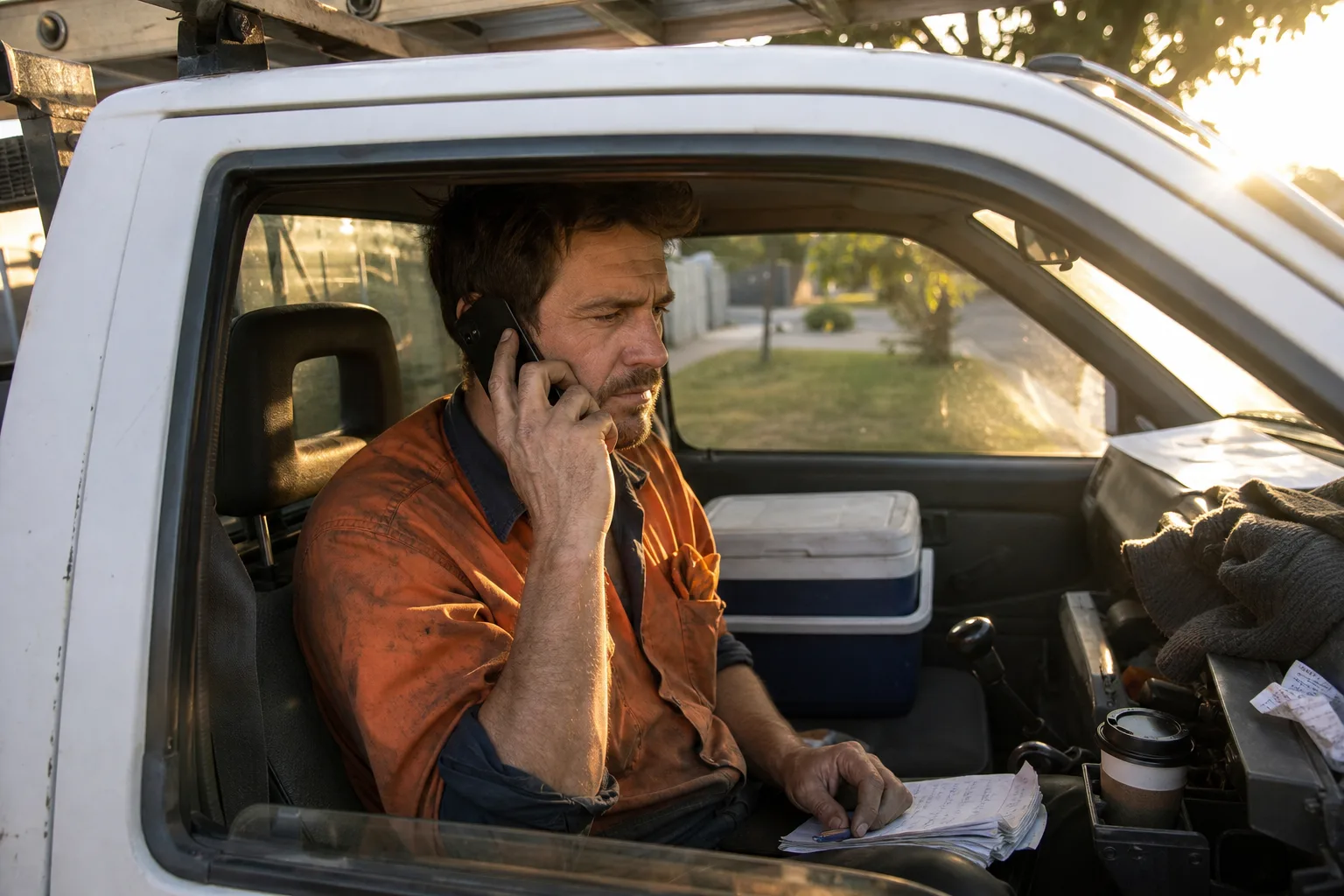
The other big worry is robotic sounding AI. Tradies say their customers, especially older ones, will hang up on anything that sounds like a phone menu from 2005. Fair enough. Turn each complaint into a buying criterion: ask for a live demo call so you can ring the AI yourself, listen hard for a natural Australian accent, insist on month to month billing, and pick tools that work in the background without you feeding them data all day.
How to choose the right AI for your trade business
The right category depends on your biggest leak, not on what's trending. Run through this checklist before you spend anything.
- Where do I lose the most money each week: missed calls, slow quotes, unpaid invoices or scheduling chaos?
- How many calls do I actually miss? (Check your phone log for a week.)
- Will this tool work without me entering data every day?
- Can I hear it or trial it before paying?
- Is it month to month, and does it cover Australia and New Zealand if I work across both?
Your first 30 days. Automate one thing only. For most tradies that's call answering, because it's the leak that bleeds the most. A platform like Callacy can have an AI voice agent answering calls for a trade business within days, capturing job details while you work. Week one: set it up and test it yourself. Weeks two to four: let it run, count recovered calls and booked jobs, then decide what to automate next.
Common concerns, answered honestly
"I'm not tech savvy." You don't need to be for the done for you categories. If you can use a smartphone, you can run an AI receptionist. DIY tools demand more patience.
"Will customers cop talking to AI?" Mostly yes, if it sounds natural and solves their problem fast. People ring a tradie to get a job booked, not for a chat. What they hate is voicemail. Modern voice AI handles Aussie accents and slang well, but always ring it yourself first.
"Is it worth the money?" Do the maths on one recovered job. If your average job is worth a few hundred dollars and AI answering picks up even two extra jobs a month, most subscriptions pay for themselves several times over.
"Will it replace my office staff?" No. It replaces the phone tag and after hours gaps that burn them out. For sole traders it replaces the receptionist you couldn't afford anyway.
AI for different trades: sparkies, plumbers and builders
The same categories apply, but the best starting point shifts by trade.
Plumbers and sparkies live on urgent inbound calls, so an AI receptionist pays off fastest. A burst pipe caller won't leave a voicemail; they'll ring the next plumber. AI answering with call routing can flag emergencies straight to your mobile and book the routine jobs itself. There are purpose built setups for plumbing businesses that already know the difference between a blocked drain and a gas leak.
Builders and chippies deal in longer sales cycles and bigger quotes. Their biggest leak is quote follow up, so automated follow up calls and emails usually beat call answering as the first automation. Landscapers and HVAC techs sit in between: seasonal call spikes make after hours answering valuable, and AI that books jobs for air conditioning work shows how call volume surges in a heatwave get captured instead of lost.
Frequently asked questions
How much does AI cost for a tradie per month in Australia?
Anywhere from $0 to over $1,000 a month depending on the category. Free DIY tools cost nothing but your time, job management platforms typically run $50 to $300 or more, AI voice receptionists sit around $30 to $500 depending on call volume, and custom done for you setups start above $1,000 plus setup fees. Call volume and integrations move the price most.
What is the best AI tool for tradies in 2026?
There's no single best tool, only the best category for your biggest problem. Missed calls? An AI voice receptionist. Drowning in scheduling and invoicing? A job management platform with AI features. Just want help writing quotes? A free AI writing assistant. Start with the leak that costs you the most money each week.
Can an AI receptionist answer my calls while I'm on the tools?
Yes, that's exactly what it's built for. It answers 24/7, takes the caller's name, suburb, job type and urgency, books jobs into your calendar and texts you a summary. Urgent calls can be routed straight through to your mobile if you choose.
Will my customers know they're talking to an AI?
Often they won't, because modern voice AI sounds natural and handles Australian accents well. Many businesses choose to have the AI introduce itself as a virtual assistant anyway, and callers rarely mind as long as their job gets booked quickly. Always ring the service yourself before buying to judge the voice quality.
Do I need to be tech savvy to set up AI for my trade business?
Not for the done for you categories. AI voice receptionists are largely configured for you, and if you can use a smartphone you can manage one. DIY tools and job management platforms demand more setup effort and patience, so factor that in if you'd rather stay on the tools.
Are there free AI tools for tradies in Australia?
Yes. General AI writing assistants have free tiers that handle quote drafts, emails and social posts reasonably well. What they can't do is answer your phone or chase invoices without you driving them, so treat them as a no cost way to test the water before paying for a tool that works in the background.